
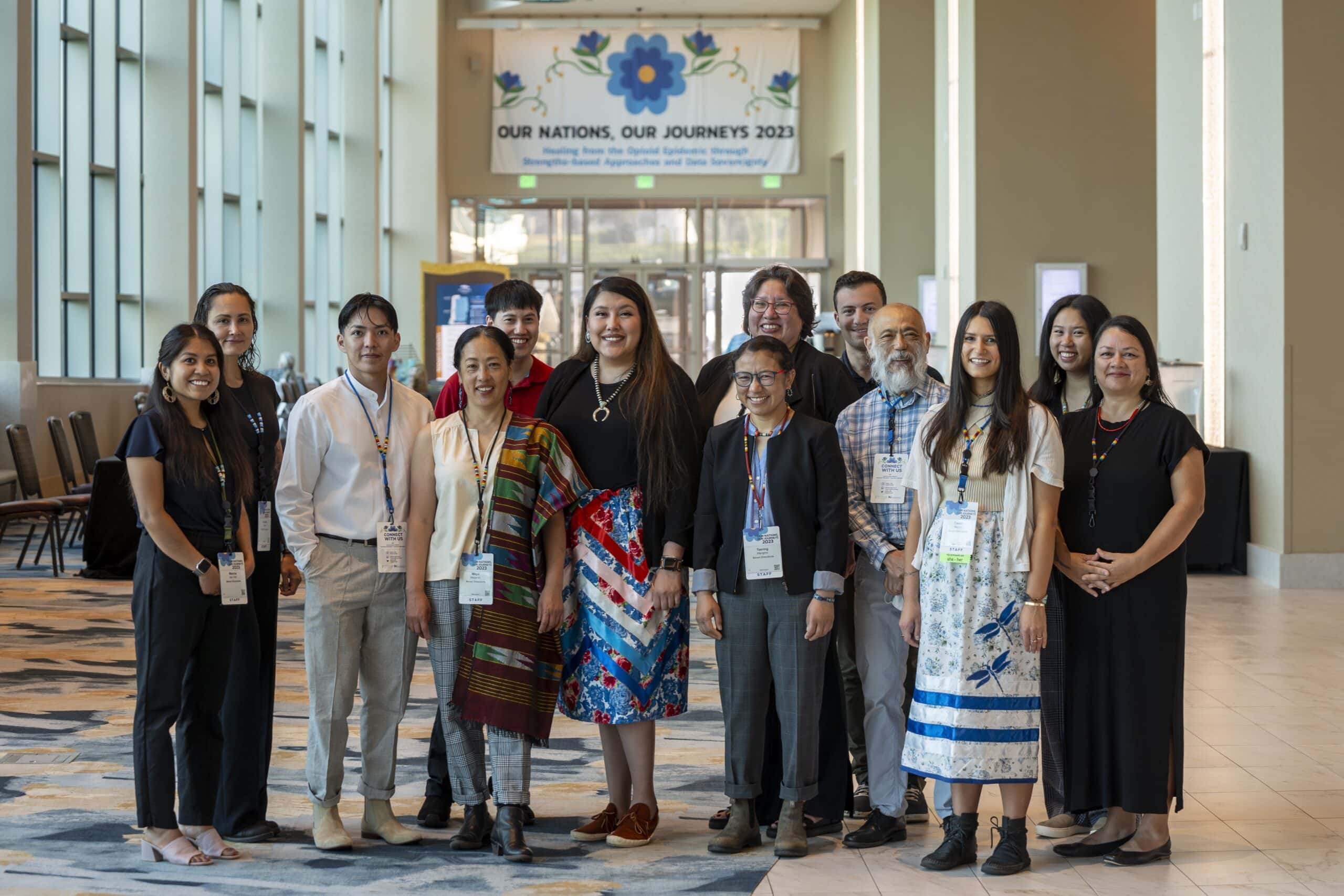



Who We Are
We are a public health institute committed to the health & wellness of Indigenous communities.
We are the first national public health institute in the United States to focus solely on improving Indigenous health and wellness. We are committed to cultivating and sharing knowledge, connecting communities and resources, and working to achieve shared goals for future generations.
Featured Projects
Seven Directions Projects
The ONOJ Conference
A gathering that celebrates indigenous achievements and innovations in public health practice.
Gathering Grounds
Join Gathering Grounds to listen, grow, and share with other public health professionals dedicated to supporting healthy Indigenous communities.
Latest Resources
Seven Directions Publications and Resources

2022
The 2022 CDC Clinical Practice Guideline for Prescribing Opioids for Pain provides recommendations for clinicians providing pain care, including opioid therapy for outpatients aged 18 and above, outside of sickle cell disease-related pain management, cancer-related pain management, palliative care, and end-of-life care. The "Practical Ways to Implement" Resource covers insights gained from a literature review and meetings with Subject Matter Experts on how best to implement these guidelines among American Indian and Alaska Native Patients. The recommendations are grouped into four areas, with regard to the experience of pain and pain management within the context of AI/AN care: 1) Indigenous [...]
Category: Clinical Practice, Opioid Overdose Prevention

2019
American Indians and Alaska Natives in the United States continue to persist and thrive, but the opioid crisis and opioid overdose deaths are a current threat to health and wellbeing. American Indians in Minnesota have the highest opioid overdose death rate of American Indians and Alaska Natives in the United States. Aim: As one effort to address this, a partnership was initiated between a Minnesota rural tribal nation, Gaa-waabaabiganikaag (White EarthNation), and investigators at the University of Minnesota Medical School, Duluth Campus, with funding support from the National Drug Early Warning System (NDEWS). These partners embarked on a NDEWS HotSpot study to identify risk and protective factors for opioid overdose deaths for White Earth Nation.
This resource was shared during a Gathering Grounds sessionCategory: Gathering Grounds

2022
Seven Directions, in partnership with the Inter-Tribal Council of Arizona (ITCA) and the Great Lakes Inter-Tribal Epidemiology Center (GLITEC), created a Risk Communication Toolkit for Tribes to develop or improve their health risk communication efforts. This Toolkit has resources and examples of effective communication for Indigenous communities related to suicide, adverse childhood experiences, and intimate partner violence.
Category: Injury Prevention, Violence Prevention
2020
The following are resources that were shared during the Gathering Grounds: How is your Tribal or Urban Indian community responding to COVID-19? Community Meeting on April 7, 2020.
The goal of Gathering Grounds Indigenous Community of Practice is to collect, share and discuss promising public health practices around the selected topics with Tribal leaders, Tribal and Urban Indigenous public health professionals, and content experts. To register for Gathering Grounds visit: https://www.indigenousphi.org/indigenous-community-of-practice.
This resource was shared during a Gathering Grounds session
Category: Gathering Grounds

What We Do
We bring Indigenous knowledge &
worldview to public health practice.
We prioritize Indigenous knowledge and traditional practices to improve community health. We seek opportunities to integrate cultural beliefs and practices into public health and health care services.
why we do it
Indigenous Peoples know the pathway forward.
Indigenous Peoples are the original architects of wellness systems – ways of life that kept us and our environment healthy. Together, we can advance a shared vision for vibrant, healthy American Indian and Alaska Native communities.
About Our Practice
The Seven Sacred Directions
Seven Directions was born from a desire to create greater connectivity across the many tribes, communities and organizations that have the health and wellness of American Indian and Alaska Native people at the heart of what they do. We are guided by the “seven directions” of practice: Integration & Holistic Wellness, Culture & Identity, Families & Communities, Respect for Sovereignty, Service, Indigenous Knowledge, and Tribal Governance.
The Seven Sacred Directions serve as an indigenous framework for presenting the strategic directions for the public health agenda.

indigenous Public Health
Seven Directions is a member of the National Network of Public Health Institutes (PHI)
Public health institutes work with a range of multi-sector and multi-disciplinary partners towards a shared mission that creates conditions leading to improved health. Seven Directions aims to support the tribal and urban Indian public health system in much the same manner, but in a way that embodies Indigenous knowledge, practices and approaches to wellness.